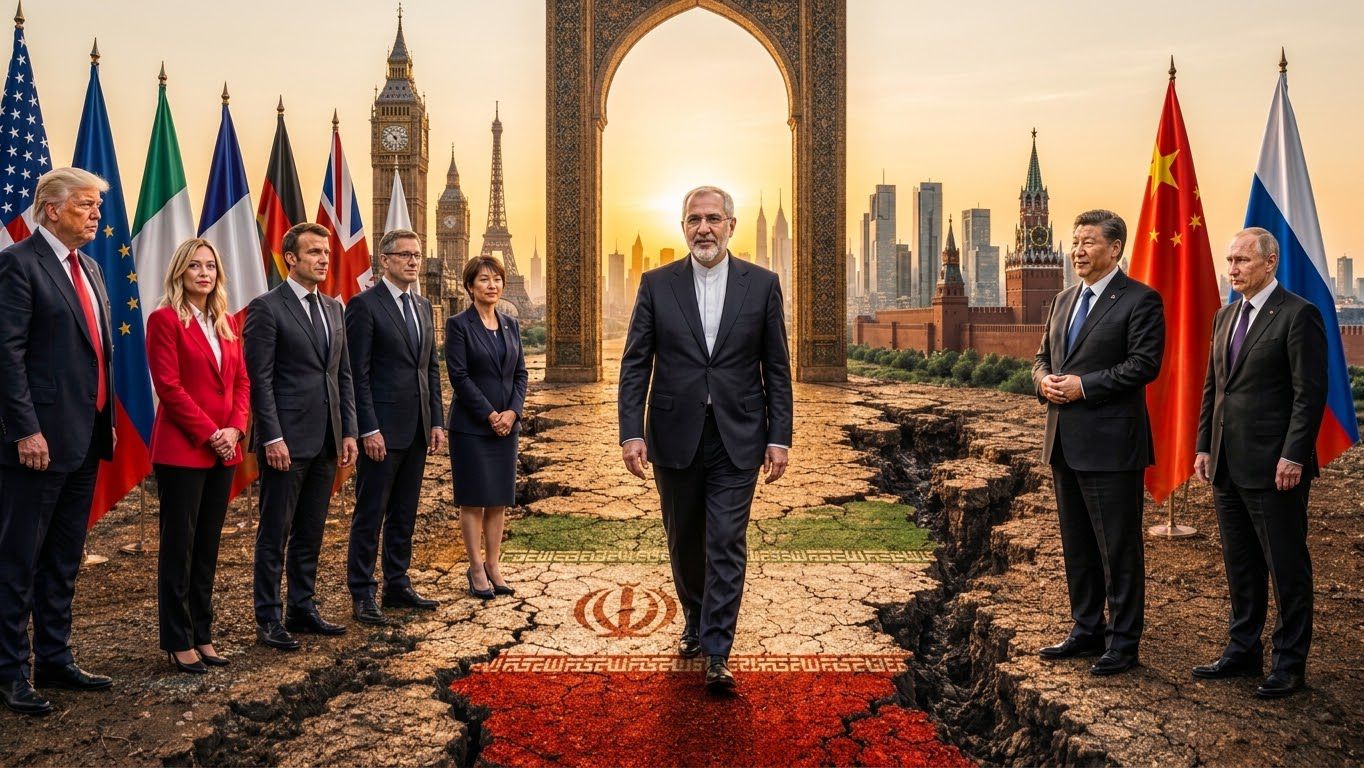
On June 18, 2026, U.S.-Iran negotiations began in Switzerland to determine the terms for ending the conflict triggered by Operation “Epic Fury” on February 28, 2026. Following the first round of talks, the two sides established four working groups, while the United States suspended sanctions on Iranian oil exports. Negotiations on the final settlement are expected to continue for up to 60 days.
The repeated breakdowns and resumptions of the talks — including the collapse of a negotiating round scheduled for June 19 — reflect an active struggle between two competing influence groups within Iran’s leadership. At the center of that struggle is the memorandum of understanding that entered into force on June 18, 2026, through Pakistani mediation.
The document formalized the end of the active phase of hostilities and provided for the reopening of the Strait of Hormuz, the lifting of the naval blockade of Iranian ports, and the launch of an economic recovery plan for Iran valued at no less than $300 billion.
The rivalry between the two groups of Iranian elites is fueled by the memorandum’s lack of precise language and the prospect that its provisions could be revised during negotiations, giving each side grounds to interpret the document in its own favor.
The pragmatic coalition uses the memorandum to demonstrate the viability of dialogue with the United States and to reduce tensions in relations with the democratic bloc.
Advocates of a hardline foreign policy, by contrast, view the current terms of the arrangement as concessions that are unacceptable for Tehran and regard deeper alignment with the states of the autocratic axis as the only reliable guarantee of the survival and stability of the ayatollah regime.
The outcome of the confrontation between these two competing visions within Iran’s ruling elite — a confrontation that intensified during the drafting of the memorandum — will shape the priorities with which Tehran approaches the next phase of the escalating global rivalry between the United States and China.
The evolution of this internal struggle is significant for two reasons at once. It will determine China’s future ability to use the ayatollah regime as its primary channel of autocratic influence in the region, and it will influence the outcome of U.S. efforts to reduce Tehran’s asymmetric dependence on Beijing. For this reason, Washington and Beijing are both seeking to affect the contest indirectly through signals that strengthen one faction of the Iranian elite over the other.
China’s and Russia’s inability to provide Tehran with meaningful support during the war strengthened those factions within the Iranian leadership that favor distancing the country from the autocracies and gave them additional tools to advance their preferred course. At the same time, the United States and the European Union are moving closer through a mutual exchange of concessions concerning Russia and China.
The U.S.-Israel alliance is also experiencing a period of strain, as the objectives of Washington and Prime Minister Netanyahu’s government in the Middle East continue to diverge.
Each of these developments, viewed individually, represents a tactical shift. Taken together, however, they are creating a new balance of power in which Washington is shifting its focus toward the Pacific theater as the anticipated focal point of its principal confrontation with Beijing while simultaneously weakening the economic and political ties through which China has maintained Iran within its sphere of influence.
The White House’s rapid exit from Operation “Epic Fury” is subordinate to a broader strategic calculation. A prolonged commitment in the Middle East would have drained American resources and diverted attention from the Pacific theater, while an escalation into a direct ground campaign would have benefited Beijing above all by tying down U.S. forces in a secondary region.
The consolidation of an interim status quo also carries a reverse, signaling dimension for Washington. By refraining from a ground operation and keeping its forces in reserve, the United States demonstrates to Beijing the scale of resources it remains capable of mobilizing in the Pacific theater.
Within its own military planning, Beijing interprets this signal as an element of deterrence because it demonstrates America’s ability to concentrate its principal resources in the Pacific without exhausting itself in peripheral theaters.
Although the specific terms of an agreement with Iran remain under discussion, even their final content will remain secondary compared to the fact of the conflict’s conclusion itself, because the broader U.S.-China confrontation will diminish the significance of individual provisions within any Middle Eastern settlement.
Iran Reassesses Its Allies Following Insufficient Wartime Support
The growing influence within Iran’s leadership of the faction advocating partial distancing from cooperation with Russia and China is rooted in evidence gathered during the conflict that Beijing and Moscow are unreliable allies.
Despite declaratory support from the governments of the autocratic axis, Tehran encountered an unwillingness on the part of both Beijing and Moscow to provide meaningful military and economic assistance during Operation “Epic Fury.”
Russia, having concentrated the maximum share of its military and economic resources on combat operations in Ukraine, viewed the Middle Eastern conflict primarily as a factor that could drive up energy prices and lacked the capacity to provide effective support to Tehran.
The extent to which part of the Iranian elite had come to question the reliability of partnership with Moscow was reflected in the outcomes of the “Russian-Iranian Cooperation” conference held in Moscow on June 3, 2026, with the participation of representatives from Iran’s Ministry of Foreign Affairs.
The Iranian side highlighted the discrepancy between official rhetoric describing the relationship as an alliance and the actual level of Russian support, noting that Tehran’s requests for political, diplomatic, and military-technical assistance during the conflict with the United States and Israel largely went unanswered.
The position of the Russian leadership, by contrast, rested on the existing comprehensive strategic partnership treaty between the two countries, which does not obligate Russia to participate in armed conflicts involving the ayatollah regime.
This response confirmed for Iranian elites that their perception of Moscow as one of Iran’s security guarantors — a perception that had persisted throughout 2022–2025 — had been overstated.
Throughout the period of U.S.-Iran military confrontation, China’s Ministry of Foreign Affairs focused its messaging on calls for peace and respect for Iranian sovereignty.
At the same time, during a meeting between Iranian Foreign Minister Abbas Araghchi and Wang Yi in May 2026, the Chinese diplomat insisted on the rapid restoration of navigation through the Strait of Hormuz, as more than one-quarter of all oil transported through that route before the launch of Operation “Epic Fury” was destined for China.
The Iran-China partnership agreement signed in 2021 was intended to secure Chinese purchases of Iranian oil at below-market prices in exchange for Beijing investing $400 billion in the Iranian economy.
In practice, however, Chinese companies avoided significant investments because of the threat of U.S. secondary sanctions. As a result, China’s total direct investment in Iran between 2021 and 2025 amounted to roughly $2 billion — 30 to 40 times less than Chinese investment in other states across the region.
Despite repeated declarations about expanding cooperation, trade between Tehran and Beijing over the past decade narrowed largely to the energy sector, while its structure demonstrated Iran’s dependence on a single major buyer.
By late 2025, China was importing up to 1.4 million barrels of Iranian oil per day, accounting for approximately 80–90 percent of Iran’s total oil exports. This gave Beijing the ability to dictate the terms of the trading relationship.
A clear indication of Tehran’s deep dependence on the Chinese market was the increase in the discount on Iranian Light crude offered to Chinese buyers, which rose from $4 per barrel in August 2025 to $8–9 per barrel by the end of the year.
The appointment in May 2026 of Parliament Speaker Mohammad-Bagher Ghalibaf as Tehran’s special envoy to China, with a mandate to pursue revisions to the strategic cooperation agreement, demonstrated that the Iranian elite had begun reassessing the country’s previous orientation toward prioritizing engagement with Beijing.
The Final Shape of the Settlement and the Struggle Between Two Power Centers in Tehran
The elimination of Ayatollah Ali Khamenei during the opening hours of Operation “Epic Fury” accelerated Iran’s transition toward a collective decision-making model in which the new Supreme Leader, Mojtaba Khamenei, has been compelled to balance between two competing camps.
The pragmatic faction of the Iranian elite, consolidated around President Pezeshkian and Parliament Speaker Ghalibaf, controls the Supreme National Security Council (SNSC), the Presidential Administration, and the Ministry of Foreign Affairs.
This group’s position rests on the belief that reducing tensions with the United States creates the conditions for sanctions relief, foreign investment, and the restoration of transit through the Strait of Hormuz as a means of stabilizing the economy.
Hardliners led by former SNSC Secretary Saeed Jalili, who draw support from the Stability Front of the Islamic Revolution, religious institutions, and the Basij militia, regard an agreement with the United States as a disadvantageous conclusion to the conflict.
Pragmatic factions within the Iranian elite are using the limited support provided by China and Russia during the conflict as their primary argument for reaching an agreement with Washington. They contend that the previous strategy pursued by hardliners — one that overestimated the value of alignment with the autocratic axis — produced foreign policy setbacks for Iran.
The political forces that expressed dissatisfaction with the actions and rhetoric of Beijing and Moscow during Operation “Epic Fury” have become the strongest supporters of an agreement with the United States.
Unlike those factions that favor continued confrontation, the pragmatists argue that, in the absence of genuine allied security guarantees from the autocratic axis, direct arrangements with Washington constitute the only viable means of preserving Iranian sovereignty.
This argument has found support among a broader segment of Iran’s military-political leadership, which recognizes that the economic crisis poses serious risks to the stability of the ayatollah regime.
The decisive factor behind Tehran’s acceptance of the memorandum was the position of the military-security apparatus, part of which endorsed a diplomatic path toward resolving the conflict.
Quds Force Commander Esmail Qaani and IRGC Aerospace Force Commander Majid Mousavi publicly approved the memorandum, while IRGC Deputy for Political Affairs Yadollah Javani described diplomacy and military operations as two parallel paths for advancing the interests of the Iranian regime.
A central figure in introducing the pragmatic position into the environment of the Islamic Revolutionary Guard Corps (IRGC) has been Parliament Speaker Ghalibaf, who combines a pragmatic political outlook with the background of a career IRGC officer, former commander of the Corps’ Air Force, former police chief, and former Mayor of Tehran.
This background makes his arguments in favor of an agreement particularly influential within the military-security establishment, since Ghalibaf emerged from its ranks and retains extensive ties within the senior officer corps. Through him, the pragmatic camp has gained a channel of influence into segments of the IRGC that had previously remained closed to the civilian wing of the elite.
Another source of leverage for the moderate factions was the decision to grant representatives of the regular armed forces voting rights during approval of the agreement within the Supreme National Security Council, enabling pragmatists to reduce the influence of hardline positions.
Support from part of the military leadership provided the moderate camp with tools it previously lacked and shifted the internal balance in favor of de-escalation.
The document that serves as the foundation for negotiating a settlement with Iran is structured in a way that allows both factions of the Iranian elite to portray its provisions as evidence of their own advantage in the domestic political struggle.
The flexibility built into the text made it possible to avoid Tehran’s rejection of the memorandum at the signing stage, but it did not eliminate the fundamental disagreements between pragmatists and hardliners over the final terms of the agreement.
The pragmatists secured confirmation of the immediate suspension of military operations, the lifting of the naval blockade within 30 days, U.S. Treasury Department licenses for oil and gas exports, and full access for the Central Bank to $24 billion in frozen assets.
For the hardliners, the most important provisions were the absence of restrictions on Iran’s ballistic missile program and drone development, U.S. commitments to withdraw forces from territories in close proximity to Iran, and authorization for uranium processing to continue inside the country without export abroad.
Iran’s concessions to the United States are minimal. Tehran retained a substantial portion of its missile capabilities, including the Middle East’s largest missile arsenal, estimated before the conflict at more than 3,000 short- and medium-range ballistic missiles; it did not abandon support for regional proxy forces; and it regained access to significant financial resources.
Successful implementation of an agreement based on the memorandum would allow pragmatic factions to advance the argument that a partial reduction of tensions with the democratic bloc offers Tehran greater advantages than unconditional alignment with the autocratic axis.
Even before the final terms of a settlement have been determined, Iran’s energy sector has already begun to benefit from the negotiating process. Between June 14 and June 19, 2026, following the lifting of the blockade, the country brought approximately 18 million barrels of crude oil to market. A significant share consisted of inventories accumulated during the blockade, generating roughly $1.44 billion for the Iranian economy.
For advocates of Iran’s hardline foreign policy course, who have maintained both their political influence and their own financial-economic position through the country’s isolation from global trade and resistance to political liberalization, the benefits now being extended to Iran’s economy and commercial sector create the conditions for a gradual erosion of their influence.
As early as June 20, 2026, the IRGC-linked news agency Tasnim reported the closure of the Strait of Hormuz and signaled additional steps that could complicate the drafting of the final version of a U.S.-Iran agreement.
Financial Levers Against the IRGC’s Economic Power
The resistance that part of the Islamic Revolutionary Guard Corps (IRGC) is mounting against efforts to de-escalate the conflict and restore Tehran’s unrestricted trade with foreign jurisdictions stems from the Corps’ desire to preserve the foundations of its power, which rest on its central role in circumventing sanctions and maintaining artificial barriers to maritime traffic through the Strait of Hormuz.
For decades, the IRGC has maintained a monopoly over the illicit trade and financial networks built to sustain the stability of the ayatollah regime under sanctions. It was through the IRGC’s sanctions-evasion mechanisms that Iranian businesses were compelled to conduct commercial activity.
The Corps controls a fleet of tankers operating under foreign flags that disguise Iranian oil as Malaysian blends, a network of financial intermediaries in Turkey, the UAE, and Hong Kong used to bypass the SWIFT system, and the Khatam al-Anbiya construction conglomerate, which serves as the indispensable partner for foreign investors seeking access to the Iranian market.
IRGC-affiliated entities and religious foundations control between one-third and more than one-half of Iran’s GDP, dominating construction, energy, telecommunications, and banking.
The volume of smuggling conducted through ports and terminals controlled by the Corps and operating outside customs oversight is estimated at $20–25 billion annually, accounting for roughly 30 percent of total imports.
The trade and economic system constructed under the ayatollah regime guaranteed substantial intermediary revenues for the IRGC while giving it influence over most of Iran’s business sector.
The establishment of viable conditions for legal trade with Iran threatens the foundations of the IRGC’s influence over the country’s domestic agenda.
Financing for the $300 billion economic recovery plan is expected to come from the states of the Persian Gulf, as well as from an international consortium of European, Asian, and American energy corporations interested in developing Iranian hydrocarbon fields.
The country’s postwar reconstruction will proceed through the purchase of goods, services, and infrastructure projects from democratic states and neutral jurisdictions, with settlements conducted in dollar-denominated transactions.
During the sanctions era, the ultimate beneficiaries of such contracts were primarily the ayatollah regime’s autocratic partners, as Iran remained a sanctioned state with access to imports from only a limited group of countries.
Restored access to assets and dollar-based transactions gives Tehran the ability to work with a broader range of suppliers without relying on IRGC-controlled intermediaries. This reduces Iran’s dependence on China and creates the conditions for a gradual weakening of Tehran’s orientation toward the autocratic axis through financial instruments.
The lifting of sanctions, which would be one outcome of a successful U.S.-Iran negotiating process, would provide Iranian companies with legal export channels and the ability to conduct dollar transactions without paying commissions associated with sanctions-evasion mechanisms.
In the absence of trade restrictions, the IRGC’s shadow infrastructure loses its economic rationale, while the operation of its shadow tanker fleet becomes commercially uncompetitive.
The attraction of international investment — one of the principal mechanisms for Iran’s postwar recovery and economic development — requires compliance with international financial monitoring standards.
The continued designation of the IRGC as a terrorist organization will encourage foreign investors to avoid cooperation with entities controlled by the Corps in order to preserve access to the dollar-based financial system and operate free of restrictions.
The loss of the IRGC’s central position within Iran’s business sector would strengthen the country’s emerging economic elites, whose primary interest will be expanding trade with all major global jurisdictions and, above all, with the highly solvent markets of the United States and Europe.
An Iranian economy constrained by sanctions remained advantageous primarily to China, as it provided Beijing with access to cheap oil in exchange for limited investment.
Bringing Iran’s economy out from under trade restrictions directly contradicts Beijing’s interests. As a result, the Chinese leadership is seeking to prevent the emergence of an effective U.S.-Iran agreement by signaling support to hardline factions within the Iranian leadership and encouraging internal tensions within the U.S.-Israeli coalition.
Contradictions Between the U.S. Administration and Israel Deepen
Despite jointly conducting Operation “Epic Fury,” Washington and Jerusalem entered the Iranian campaign with different strategic objectives. Since the spring of 2026, the U.S. administration had pursued a limited-duration operation focused on destroying Tehran’s missile and nuclear infrastructure in order to reopen the Strait of Hormuz as quickly as possible and avoid an economic recession ahead of the congressional midterm elections.
Prime Minister Netanyahu’s government, by contrast, sought to employ American military power in pursuit of Israel’s strategic objective: the elimination of the ayatollah regime and the construction of a new governing model in Iran.
Jerusalem pursued this course against the backdrop of the most severe economic strain Israel has experienced in more than a decade. The costs of continuous warfare since 2023 pushed the budget deficit to nearly 7 percent of GDP in 2024 and increased public debt from 60 percent to roughly 70 percent of GDP, leading all three major credit-rating agencies to downgrade the country’s sovereign rating.
Despite their long history of political and security cooperation, Washington and Jerusalem operated during the Iranian campaign as situational allies pursuing opposite end goals.
The conflict of interests between the two coalition partners intensified after Israel carried out strikes on the outskirts of Beirut during the finalization of the memorandum’s text, resulting in the postponement of the U.S.-Iran negotiations in Switzerland that had been scheduled for June 19.
The continuation of hostilities serves Netanyahu’s political interests ahead of the October 27, 2026, elections. Since the departure of ultra-Orthodox factions in the summer of 2025, his government has relied on only 60 of the Knesset’s 120 seats, while the Prime Minister himself has remained on trial since 2020 on charges involving bribery and breach of trust.
Under these circumstances, the image of a leader capable of guaranteeing security remains Netanyahu’s only strategic asset, turning war into his principal instrument for retaining power.
For the first time since the memorandum was drafted, advocates of continued confrontation with the United States gained the upper hand among Iran’s elites, as official Tehran used the escalation in Lebanon as justification for refusing to dispatch its delegation to the negotiations.
The inability of the White House and Netanyahu’s government to formulate a common position regarding an agreement with the ayatollah regime, combined with Jerusalem’s desire to continue limited military operations in order to further weaken the Shiite “Axis of Resistance,” benefits the Chinese government.
The crisis between the American and Israeli governments will be used by Beijing as an argument in future negotiations with the Gulf monarchies, whose leaders China will seek to convince that Washington is an unreliable security guarantor.
In place of the existing informal defense guarantees provided by the White House to Middle Eastern monarchies in exchange for political support, Beijing will promote its own security frameworks in the Persian Gulf, using them as instruments for limiting U.S. influence in the Middle East.
Israeli Actions Intensify Political Confrontation in the United States Ahead of the Midterms
The 2026 electoral cycle has revived debate in the United States over the wisdom of unconditional support for Prime Minister Netanyahu’s policies.
Within the Republican Party, supporters of pragmatic diplomacy and influential voices within the MAGA movement have gained strength. Representatives of this camp argue that “Epic Fury” produced exclusively negative consequences for the United States by fueling inflation and increasing oil prices, while the prolonged conflict depleted American military stockpiles.
This debate is unfolding against the backdrop of a long-term shift in public opinion. By 2026, approximately 60 percent of adult Americans and up to 70 percent of Americans under age 50 expressed unfavorable views of Israel. Among Republicans under 50, negative assessments exceeded one-half for the first time, creating a growing divide between the party’s younger wing and its leadership.
The Democratic Party has focused attention on the illegality of Israel’s preventive strikes, using that narrative to mobilize progressive voters ahead of the elections.
The paradox of Israel’s position is that Netanyahu’s government commands an unprecedentedly influential pro-Israel lobbying network at precisely the moment when its political returns are diminishing.
Even House Democratic Minority Leader Hakeem Jeffries declined further contributions from the American Israel Public Affairs Committee (AIPAC) amid the organization’s growing reputation as a politically toxic brand in Washington.
Washington’s shift toward a more critical stance regarding the actions of the Israeli government simultaneously undermines the arguments of both opposition camps. The administration’s strong reaction to IDF strikes in Lebanon deprives critics of the White House of grounds for claiming that U.S. policy is excessively aligned with Jerusalem’s priorities.
Vice President Vance, who had been skeptical of the Iranian campaign from the outset, publicly distinguished between Israel’s right to self-defense and military strikes on Lebanese territory, describing the latter as unacceptable on the eve of the negotiating process.
This position allows the administration to separate support for Israel as a state from endorsement of the specific actions of Netanyahu’s government, reaffirming America’s commitments to Jerusalem while simultaneously reducing the basis for criticism from opponents of the White House.
The United States and Europe Exchange Concessions on Moscow and Beijing
The de-escalation of the conflict in the Middle East has initiated a process of rapprochement between the United States and the European Union built around the mutual alignment of positions toward the two principal states of the autocratic axis.
Documents released throughout June 2026 and signed by G7 leaders formalized European support for the American strategy of containing China as part of a broader exchange of concessions.
The leaders of European states, the United States, Canada, and Japan agreed to establish an informal alliance focused on securing rare-earth mineral supply chains, with the objective of reducing dependence on Chinese resources to below 60 percent between 2026 and 2030.
The United Kingdom, Germany, and France supported restrictive measures targeting Chinese industrial production and state subsidies in the renewable-energy and electric-vehicle sectors. In June 2026, President Macron characterized the actions of China’s political leadership and capital as the principal source of global trade imbalances.
Europe’s shift toward a tougher position on China occurred within a broader understanding that included a corresponding increase in American pressure on Russia.
The reverse side of this coordinated approach was an adjustment in the U.S. position toward the Russia-Ukraine war. On June 17, 2026, the White House joined a joint G7 statement supporting Ukraine, in which the participating governments announced increased deliveries of air-defense systems, interceptor missiles, and long-range strike capabilities.
At the same time, the G7 countries confirmed their readiness to consider granting Kyiv licenses that would expand Ukraine’s domestic defense-production capacity.
The restoration of energy transit through the Strait of Hormuz enabled the governments of the leading democratic states to strengthen sanctions against Russia’s oil and gas sector, some of which had been partially lifted by the U.S. Treasury Department in March 2026 as a result of the energy crisis.
The shared rhetoric of the U.S. administration and the governments of Japan, Canada, and Europe demonstrated that the White House has abandoned efforts to construct an alternative model of engagement with Moscow — efforts that had appeared repeatedly throughout 2025.
The restructuring of relations within the democratic bloc and the Trump administration’s determination to exit the Iranian conflict are subordinate to a single objective: consolidating resources ahead of an escalation in competition with China in the Pacific region.
The depth of this restructuring remains an open question. Ahead of the July NATO summit, the range of possible outcomes stretches from deeper transatlantic integration to a partial rollback of American commitments within the Alliance. Developments within that range will determine whether a durable division of labor emerges in which Europe intensifies pressure on Beijing while the United States increases pressure on Moscow.
The U.S. campaign against Iran and the response of the authoritarian axis to Operation “Epic Fury” demonstrated that both Washington and Beijing view these hostilities as a tool for preparing for a future escalation of confrontation between the autocracies and the Western bloc.
Neither side in the emerging global conflict is interested in exhausting its resources on a secondary front. As a result, Washington chose a rapid exit from the conflict rather than pursuing all of its objectives in Iran, while Beijing refrained from providing meaningful support to its ally, preserving resources for a direct confrontation with the United States.
During Operation “Epic Fury,” the Middle East became a region in which the leaders of the democratic and authoritarian blocs tested the resilience of the alliances built by their rivals and searched for vulnerabilities within those partnerships.
The negotiations in Switzerland, together with the suspension of sanctions, the partial reopening of the economy, and Iran’s return to dollar-based transactions, create the conditions for Tehran’s gradual distancing from the autocratic axis.
That distancing will unfold over a prolonged period, as open trade with the democratic world gradually creates new economic actors unconnected to the system the IRGC spent decades constructing. These actors will have a direct interest in preserving openness and will push for its further expansion.
The decisive factor in this transition will be the mechanism governing the deployment of approximately $300 billion in economic recovery funds, because the distribution of those resources will determine whether they flow to new economic actors or are captured by IRGC-linked structures seeking to recreate their monopoly within a more open economy.
The struggle for control over these assets is the critical juncture at which it will be decided whether Iran’s distancing from the autocratic axis becomes inevitable.